

Road Line Paint Removal: Do’s, Don’ts and Why Professional Assessment Matters

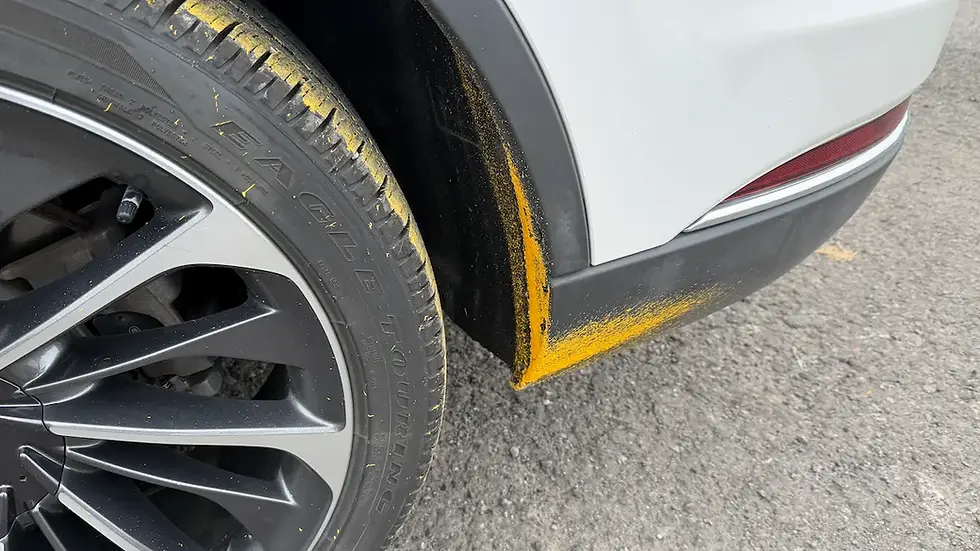
What Happens When You Drive Through Fresh Road Line Paint?
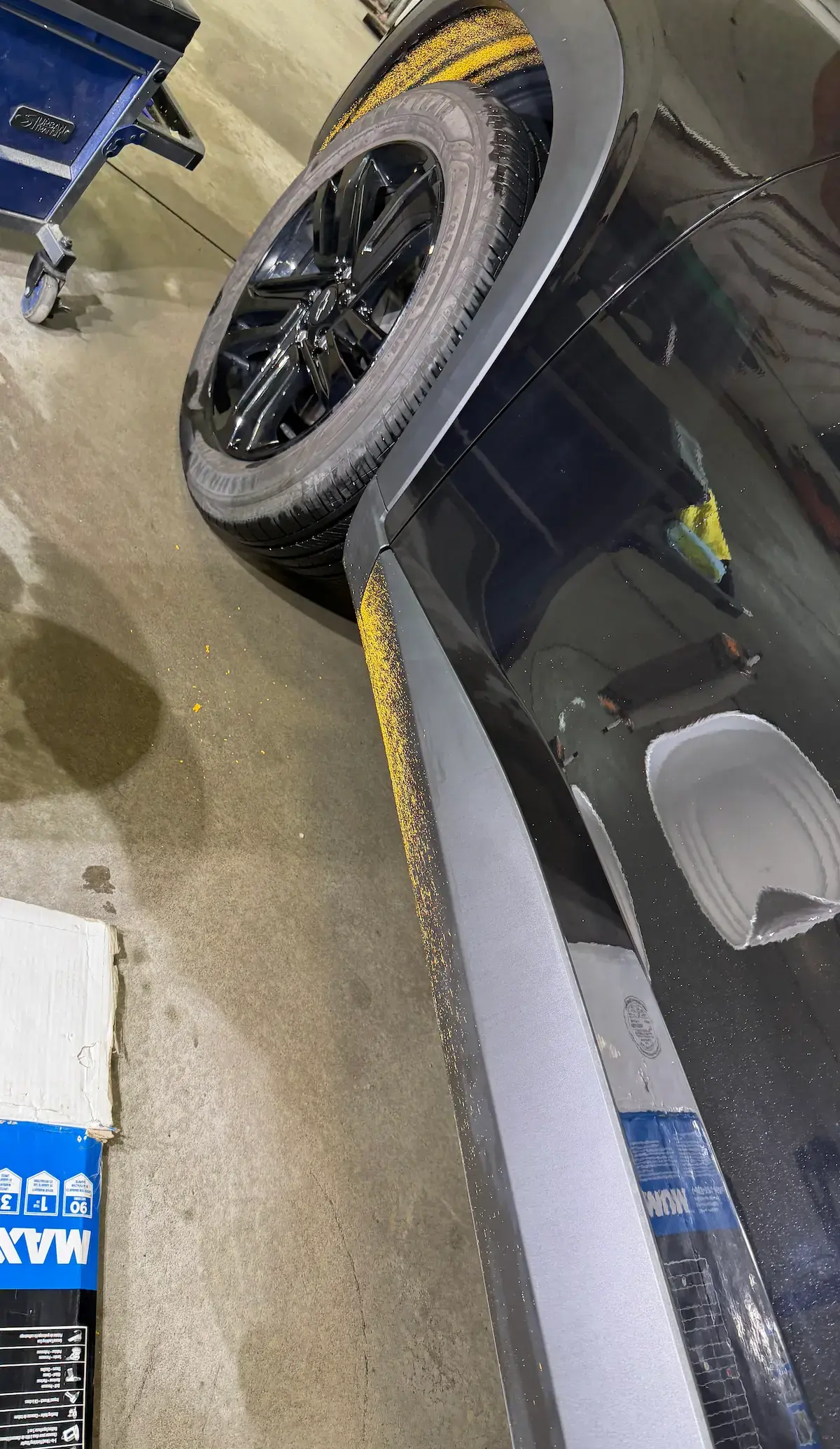
Fresh road line paint is picked up by the tires and thrown outward as the wheels rotate. It can quickly spread across the wheel wells, rocker panels, doors, bumpers, exterior trim and other areas along the side of the vehicle. What initially appears to be a small amount on one panel may also be coating surfaces that are difficult to see.
Time matters. In our experience, careful pressure washing may remove or significantly reduce extremely fresh line paint during approximately the first six hours. After that, the paint begins to harden and bond more firmly to the affected surfaces, making safe removal increasingly difficult.
However, acting quickly does not mean scrubbing or experimenting with aggressive solvents. Using the wrong product or method can damage the vehicle faster than the road paint itself.
Why Road Line Paint Should Be Removed as Soon as Possible
Road line paint becomes more difficult to remove as it cures. During the first few hours, careful pressure washing may help release fresh material. Once the contamination has hardened, pressure washing alone is generally no longer effective and a professional road line paint remover may be required.
The commonly suggested Vaseline method also has a very limited window. We tested it ourselves and found that it may only help when the line paint has been present for approximately 6–24 hours. It also leaves behind a greasy mess that must then be thoroughly removed from the vehicle.
Waiting several days—or attempting different household remedies—can turn a manageable removal into a much more labour-intensive job. The safest approach is to have the vehicle assessed as soon as possible.
Road Line Paint Can Affect More Than the Vehicle’s Paint
Road paint does not land exclusively on smooth painted panels. It can contaminate clear coat, textured plastics, tires, wheels, rocker panels, mud flaps and the interior surfaces of the wheel wells. Each material reacts differently to chemicals, pressure and mechanical cleaning.
Hard plastic wheel-well liners can sometimes be successfully cleaned or removed for better access. In other cases, replacing the liner may be more practical and less expensive than spending many hours attempting to restore it.
Cloth or felt-style sound-deadening wheel-well liners present a different problem. Road paint penetrates the fibres and generally cannot be removed completely without damaging the material. When these liners are heavily contaminated, replacement is usually required.
The Do’s of Road Line Paint Removal
Do act quickly. If the road paint is still extremely fresh—generally within approximately six hours—careful pressure washing may remove or reduce some of the contamination before it fully hardens. The pressure washer should be used cautiously and at a safe distance, particularly around damaged paint, decals, plastic trim and panel edges.
Do have the entire vehicle inspected. Road paint thrown from a rotating tire can travel farther than expected and may be hiding inside the wheel wells, underneath rocker panels or across the lower doors and bumper.
Do use a professional product specifically intended for removing road line paint from automotive surfaces. Painted panels, repainted areas, textured plastics, wheels and wheel-well liners must be assessed and treated individually. A controlled test area should always be completed before continuing across a larger section.
The Don’ts of Road Line Paint Removal
Do not use Scotch-Brite pads, kitchen scouring pads, abrasive sponges, razor blades or other aggressive household tools on automotive paint. These may remove the road paint, but they can also leave deep scuffing, scratches and swirl damage throughout the vehicle’s clear coat.
Do not assume acetone, lacquer thinner or a general-purpose paint remover is safe simply because it dissolves the contamination. Products containing high concentrations of acetone or other aggressive solvents can quickly soften, stain or permanently damage automotive paint and exterior plastics.
Do not use one chemical or removal method across every contaminated surface. A product that may be suitable for factory-painted metal could react very differently on a repainted panel, textured plastic, rubber component or wheel-well liner.

Why DIY Road Paint Removal Can Cause Permanent Damage
Removing the road paint is only half of the job—the original automotive finish underneath must also be preserved. An abrasive pad may appear to remove the contamination quickly, but it can cut deeply into the clear coat and leave extensive scuffing that is much more difficult and expensive to repair.
The Toyota Tacoma shown above required professional paint correction after a Scotch-Brite scouring pad was used to remove gold road-paint splatter. Since completing that truck, we have inspected two more vehicles whose owners made the same mistake.
Chemical damage can happen just as quickly. Aggressive solvents containing high concentrations of acetone may soften, stain or permanently alter automotive paint and exterior plastics before the user realizes damage is occurring.
Every Vehicle Requires a Different Removal Process
Before any work begins, the affected surfaces and extent of the contamination must be carefully assessed. Factory paint, repainted panels, textured plastics, painted plastic bumpers, wheels and wheel-well liners may all require different products, working times and removal methods.
The age and thickness of the road paint also matter. Fresh splatter may respond to careful pressure washing, while fully cured contamination usually requires a professional road line paint remover and a more controlled process.
A small test area helps determine whether the contamination can be safely released without staining, softening or mechanically damaging the surface underneath. This is why an accurate assessment cannot always be made from one distant photograph.
When Polishing or Paint Correction May Be Required
Even when road line paint is removed safely, the affected finish may still require polishing. Contamination can leave staining, outlines or surface marring, particularly when it has been allowed to cure or has previously been scrubbed.
If abrasive pads, improper tools or strong chemicals have already damaged the clear coat, a simple polish may not be enough. One or more stages of paint correction may be required to reduce the scuffing, scratches and swirl marks left behind.
The road paint must be properly removed before corrective polishing begins. Attempting to polish over heavy contamination can drag hardened material across the surface and create additional damage.
Can Ceramic Coating Prevent Road Line Paint Damage?
A professional ceramic coating may make some contamination easier to remove, particularly when it is addressed quickly, but it cannot prevent road line paint from reaching or curing on the vehicle.
Road paint can still collect heavily on tires, textured plastics, wheel wells and other uncoated areas. Aggressive removal methods can also damage or compromise an existing ceramic coating, so coated vehicles still require careful assessment and surface-specific removal.
When Should Road Line Paint Damage Go Through Insurance?
Extensive road-paint contamination can require many hours of specialized removal, paint correction and replacement of components such as sound-deadening wheel-well liners. In severe cases, an insurance claim may be more practical than paying for the complete repair personally.
Coverage and deductibles vary, so the vehicle owner should document the contamination with photographs and contact their insurance provider before authorizing extensive work. The insurer may also require an estimate or inspection before repairs begin.
Professional Road Line Paint Removal in Brighton and the Quinte Region
Scott’s Custom Auto Spa & Ceramic Coatings provides professional road line paint removal and paint correction from our climate-controlled studio in Brighton, Ontario. We assess the contamination, affected surfaces and any damage caused by previous removal attempts before recommending the safest approach.
Some cases can be successfully cleaned and restored, while others may require paint correction, replacement wheel-well liners or an insurance claim. An in-person assessment allows us to explain what can be safely restored before work begins.
Frequently Asked Questions About Road Line Paint Removal
Can fresh road line paint be removed with a pressure washer?
Sometimes. In our experience, careful pressure washing may remove or significantly reduce road line paint during approximately the first six hours. Once the paint has hardened, pressure washing alone is generally no longer effective. Always use safe pressure and distance around painted edges, decals, trim and previously damaged areas.
Does Vaseline remove road line paint from a vehicle?
Vaseline may help soften very fresh road paint when it has been present for approximately 6–24 hours. We tested this method ourselves and found that it has a limited working window and leaves behind a greasy mess that must also be thoroughly removed. It is unlikely to be effective once the road paint has fully hardened.
Is acetone safe for removing road paint from automotive finishes?
No—not without professional product knowledge and controlled use. Products containing high concentrations of acetone or other aggressive solvents can quickly soften, stain or permanently damage automotive clear coat, repainted panels and exterior plastics. A product capable of dissolving road paint is not automatically safe for the vehicle underneath it.
Can I use a Scotch-Brite pad to remove road paint?
No. Scotch-Brite pads, kitchen scouring pads and abrasive sponges can deeply scuff automotive clear coat. We have now inspected three vehicles damaged by this type of attempted removal, including the Toyota Tacoma shown in this article.
Can road line paint be removed from plastic trim and wheel wells?
It depends on the material and how long the contamination has been present. Hard plastic liners and trim can sometimes be safely cleaned or removed for better access. Cloth or felt-style sound-deadening wheel-well liners absorb the paint into their fibres and generally require replacement when heavily contaminated.
Will the vehicle need polishing after the road paint is removed?
Not in every case. However, polishing or paint correction may be required if the contamination leaves staining or marring, or if abrasive pads, improper tools or aggressive chemicals were previously used. The road paint must be properly removed before corrective polishing begins.
Does ceramic coating protect against road line paint?
Ceramic coating may make some contamination easier to remove when it is addressed quickly, but it cannot prevent road line paint from reaching or curing on the vehicle. Tires, wheel wells and many textured plastics may also be uncoated and remain vulnerable. If pressure washer is used quickly a ceramic coated vehicle should make the road paint come off paint and coated trim easier and quicker.
Should road line paint removal be handled through insurance?
Extensive contamination may require many hours of specialized removal, paint correction and replacement parts. In severe cases, an insurance claim may be the most practical option. Coverage and deductibles vary, so photograph the contamination and contact your insurance provider before authorizing extensive repairs.
Can road line paint removal be estimated from photographs?
Photographs can help show the general extent of the contamination, but they may not reveal road paint hidden inside wheel wells, underneath rocker panels or on different surface materials. An in-person assessment is often required before an accurate removal plan and estimate can be provided.
How quickly should I have road line paint assessed?
As soon as possible. Road paint becomes increasingly difficult to remove as it cures. Acting quickly improves the possibility of safer removal—but avoid experimenting with abrasive pads or aggressive household solvents while waiting for an assessment.
Need Help With Road Line Paint Removal?
If your vehicle has been driven through fresh road line paint, act quickly—but do not panic and begin scrubbing. Avoid Scotch-Brite pads, abrasive household sponges and aggressive solvents containing high concentrations of acetone. Take clear photographs of every affected area and arrange a professional assessment as soon as possible.
At Scott’s Custom Auto Spa & Ceramic Coatings, we assess the painted panels, exterior plastics, wheels, tires and wheel-well liners before recommending a removal plan. If the contamination is extensive, we can also help determine whether paint correction, replacement components or an insurance claim should be considered.
📍 201 Lisgar St., Brighton, ON
☎️ 613-922-8846


Comments